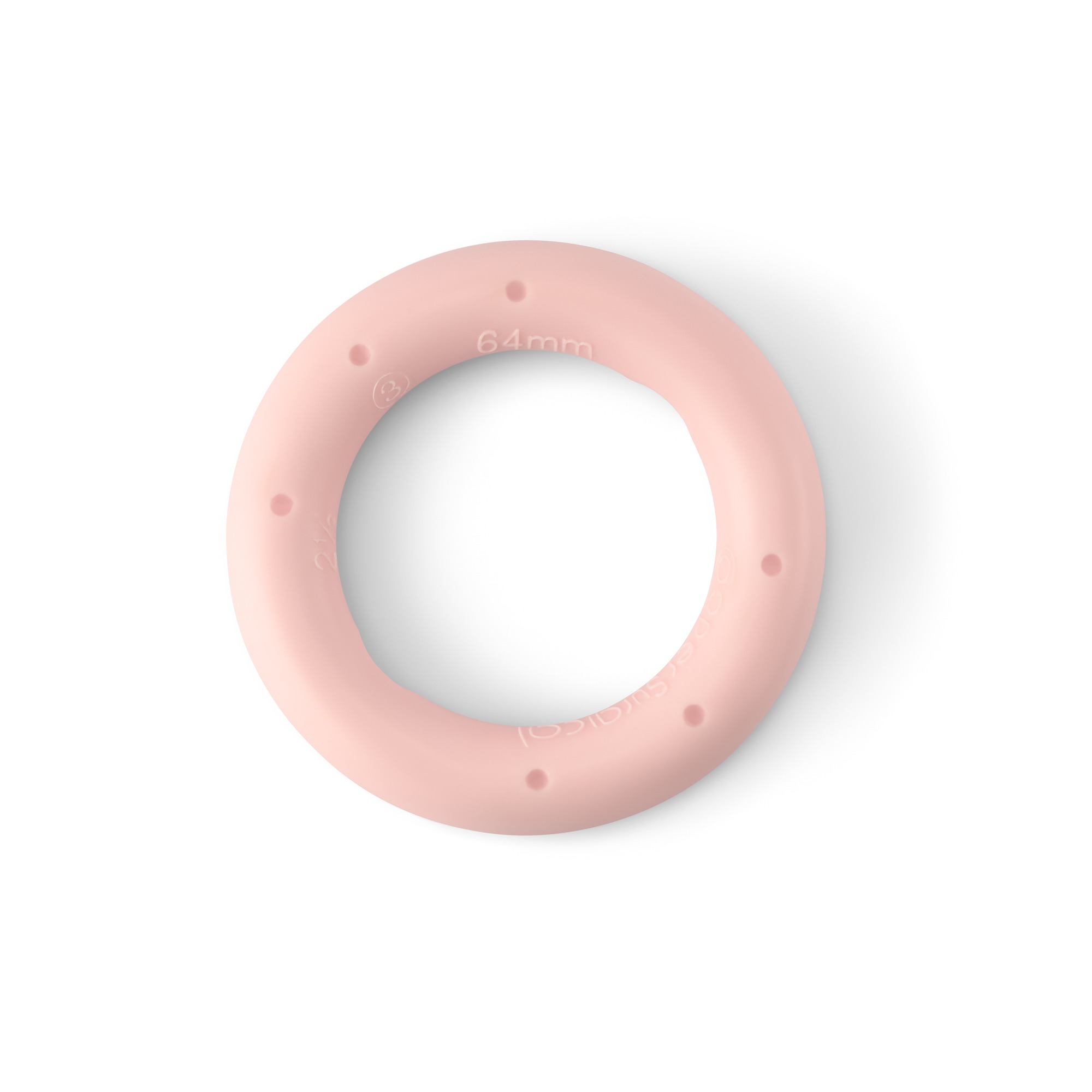
Ring pessaries are soft, flexible ring-shaped medical devices usually made from silicone. They are indicated to treat mild pelvic organ prolapse.
Ring pessaries are medical devices inserted into the vagina to support pelvic organs in women with pelvic organ prolapse (POP) or stress urinary incontinence (SUI). Usually made from silicone, they provide a non-surgical treatment option to support the bladder, uterus or vaginal walls in their normal position. [1]
Ring pessaries come in different sizes and styles, can be removed and cleaned and may be managed either by the patient or a healthcare provider depending on type and individual needs. [1]
Before pessary use is initiated, a thorough assessment should rule out contraindications — such as active vaginal or pelvic infection, severe ulceration, or inability to comply with follow‑up — and consider adjunctive measures like pelvic floor muscle training and optimisation of vaginal health with topical oestrogen where appropriate.
Rings are generally chosen for earlier stage prolapse (stage I and II), but can be successful for all stages.[2]
Sexual activity is possible with the pessary in place as the vaginal space is not filled by the device although either partner may find sexual intercourse uncomfortable and may wish to remove it before sex. Ring pessaries are commonly self-managed by patients.
Pessary use is part of a shared decision‑making process and can be continued long‑term if effective and well tolerated, enabling many women to maintain normal daily activities with reduced prolapse symptoms. The POGP guidelines emphasises the importance of assessing fit and symptom relief during the initial fitting and during scheduled reviews, and adjusting size or type if necessary to achieve optimal comfort and retention. [3]
Silicone ring pessaries are more pliable than vinyl pessaries and are considered easier to insert and remove. Silicone ring pessaries can be folded in half to reduce width for insertion. Once in place above the pubic symphysis they unfold.[2]
Ring pessaries are medical devices inserted into the vagina to support pelvic organs in women with POP or SUI. Usually made from silicone, they provide a non-surgical treatment option to support the bladder, uterus or vaginal walls in their normal position. [1]
Ring pessaries come in different sizes and styles, can be removed and cleaned and may be managed either by the patient or a healthcare provider depending on type and individual needs. [1]
A pessary for when the ring is not providing enough support. These are for a woman who has a more significant degree of uterine prolapse, for example when the pessary is in place and she is aware of the prolapse protruding through the ring or feels that the pessary is not providing enough support, a ring with support may be considered. It provides a flexible supporting membrane with drainage ports that prevents the uterus falling though the centre of the ring. [3]
Designed for women with both POP and SUI and can also be useful when new symptoms of stress incontinence develop when her prolapse is reduced with an initial trial of a pessary without knob. [3] The knob adds additional width to the pessary which may affect the sizing and provides support to the bladder neck to reduce SUI.
It should be inserted like a standard ring but with the knob to one side and then rotated in the vagina so that the knob sits behind the symphysis pubis. It should be rotated back again before removal. For a woman without prolapse but just SUI, an incontinence pessary is available, which is the same design but with a thinner ring. [3]
Silicone rings are latex-free. Some contain a steel spring to help them keep their shape. Silicone ring pessaries are available in a variety of sizes from 44-127mm outer diameter. PVC (viynl) ring pessaries are also latex-free and available in outer diameters of 50-110mm.[3]
Sizing and fitting a pessary requires careful assessment of both vaginal width and length, as well as an understanding of how different pessary types interact with an individual woman’s anatomy, prolapse characteristics and symptoms.
Successful fitting often involves trialling several diameters. It is important to note that ring pessaries differ in sizing logic from other types of pessary which may also require consideration of vaginal length and stem choice.
To learn more about different pessary types please click here.
Silicone folding pessaries are pliable and fold in the middle at the notches to improve ease of insertion and removal, especially in self-managing women with reduced manual dexterity. Once in place above the pubic symphysis silicone rings will unfold.[2]
In order to fit a PVC vinyl ring pessary, it should be compressed to reduce its width or twisted into a figure of eight. It may be helpful to run it under warm water to make it more pliable. The compression can be maintained by making a “tube” with the other hand for it to be gently pushed through during insertion. [3]
To remove a ring pessary, an index finger should be hooked around the anterior leading edge of the pessary to bring it down to the introitus. Once it reaches the introitus, it should be compressed as much as possible and then be very gently eased out of the vagina. [3]
Traditionally, a woman seeing a health care professional (HCP) for routine changes of a ring pessary would be seen approximately every six months. For a woman who is self-managing, a review may take place yearly. [3]
Pessary self-management refers to women being supported to remove and insert their pessary themselves for management of a pelvic organ prolapse. Women who are self-managing their pessary may still contact the pessary clinic or their GP for support in case of any problems or concerns. [4]
If you have a problem with your pessary, you would be able to either change the position of the pessary yourself or remove the pessary while you wait for an appointment. [4]
Who is a good candidate for using a ring pessary?
Vaginal pessaries are indicated for the conservative management of pelvic organ prolapse. Women with mild to moderate prolapse and/or stress urinary incontinence are good candidates for ring pessaries [1]
Can you have sex with a ring pessary in?
Sexual activity is possible with the pessary in place as the vaginal space is not filled by the device although either partner may find sexual intercourse uncomfortable and may wish to remove it before sex. [1]
How is a ring pessary removed?
Index finger should be hooked around the anterior leading edge of the pessary to bring it down to the introitus it should then be compressed and very gently eased out of the vagina. [1]
If I am self-managing how do I clean and store my pessary?
Wash the pessary in warm water. If you wish, you may use a mild non perfumed soap although this is not usually necessary unless you menstruate. If you are not immediately putting the pessary back in, you may store it in any clean and dry container.
Are you interested in learning more or viewing the available sizes?
References:

 Anaesthesia
 Gynaecology
 Operating Room
 Urology