A type of vaginal pessary used to manage pelvic organ prolapse (POP)
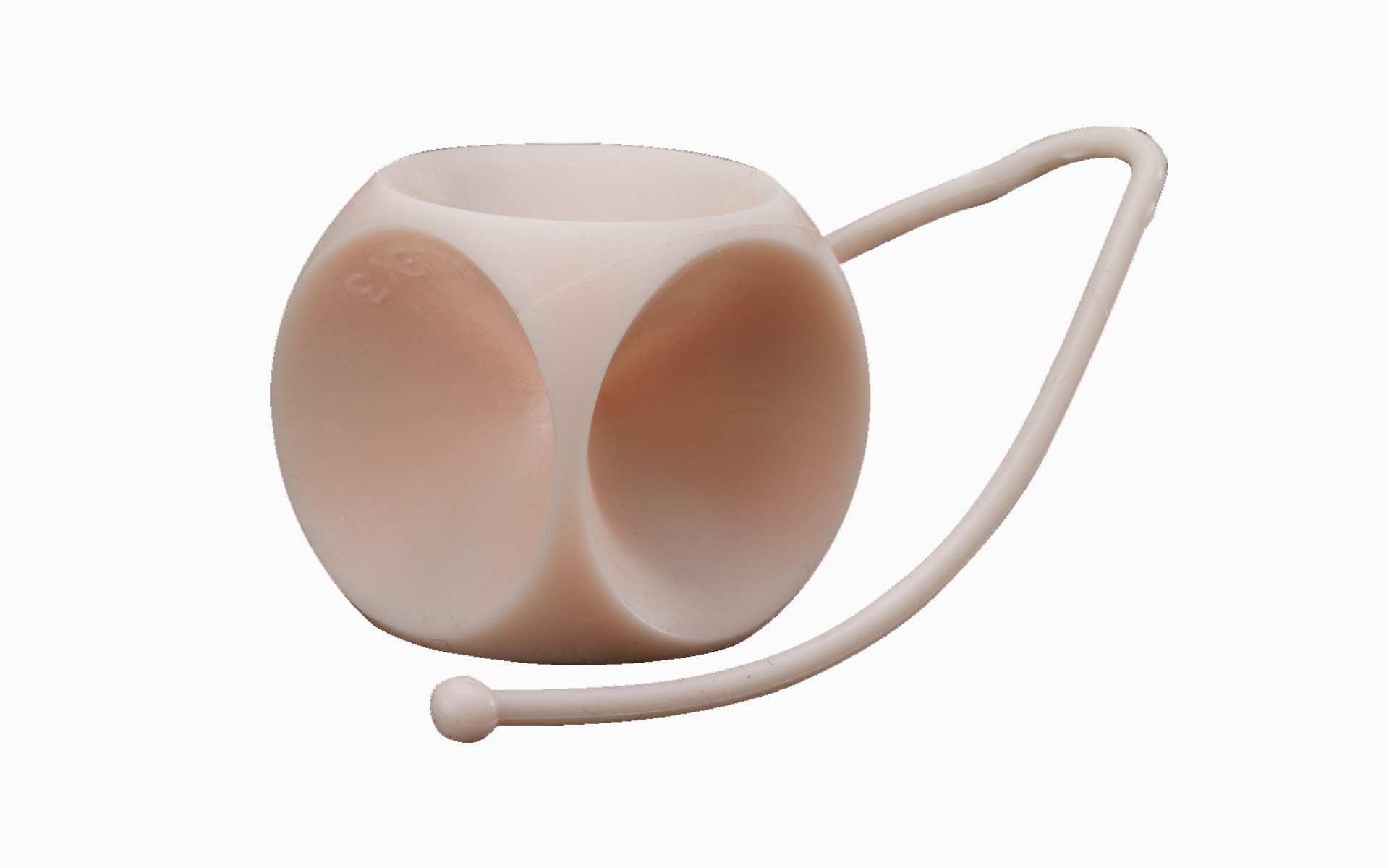
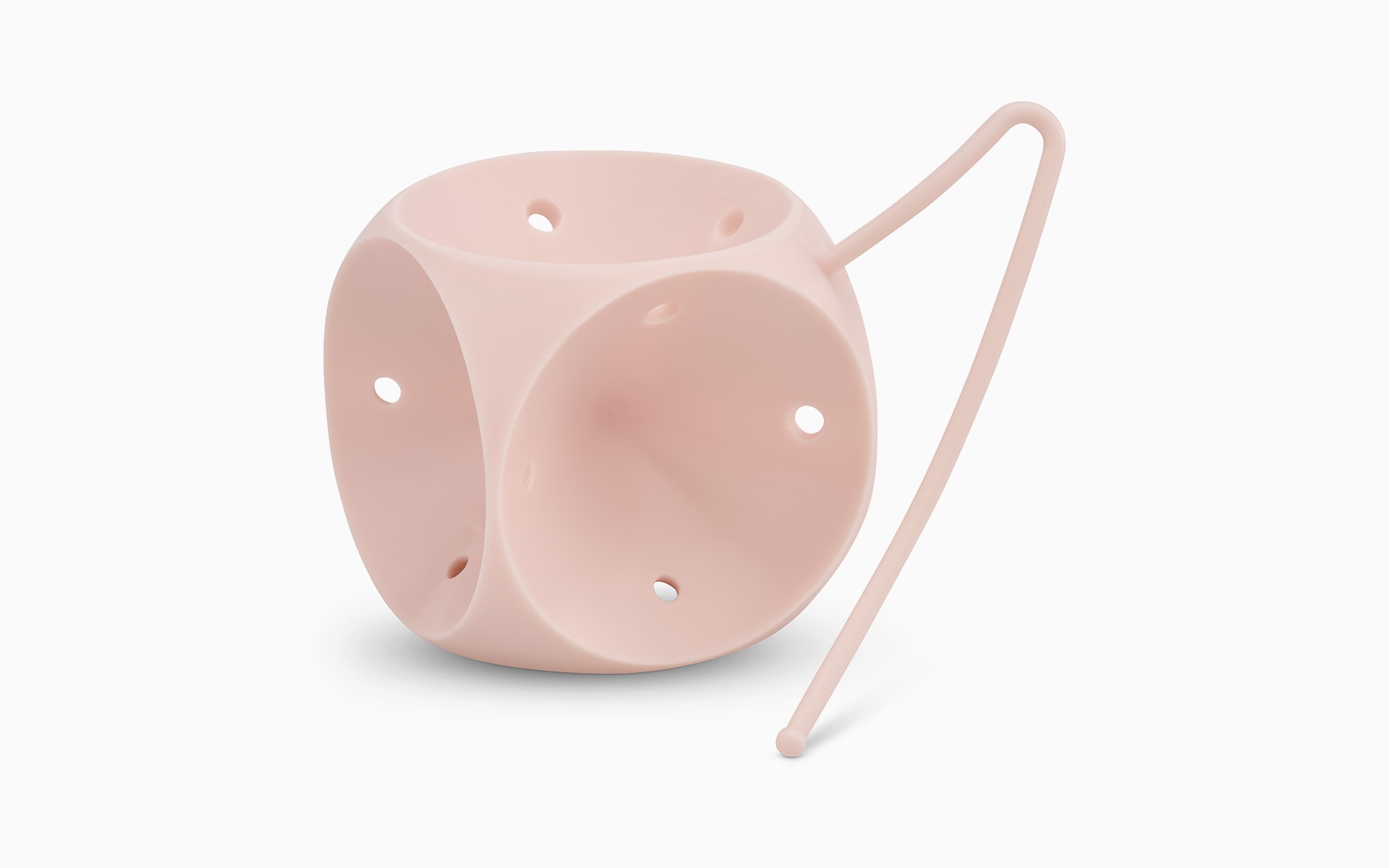
A cube pessary is a type of vaginal pessary used to manage pelvic organ prolapse (POP). It is a small, usually silicone, cube-shaped device with concave sides that create suction against the vaginal walls, helping it stay in place. It is typically used for more severe prolapse or when other pessaries have not been effective, and it often requires daily removal and cleaning by the patient.
The cube pessary is available with or without drainage holes.
The cube pessary is typically indicated for more severe or recurrent POP, particularly when other pessary types have failed to provide adequate support or retention. It is often used in cases such as advanced prolapse (e.g. third-degree prolapse or uterine prolapse/procidentia) where a higher level of vaginal wall adherence is required due to its suction-based design. [1]
As it is generally used in women who are able to self-manage, a reasonable degree of manual dexterity is required to allow for safe insertion and removal. The pessary must also be removed prior to vaginal sexual intercourse due to its positioning and risk of discomfort or displacement. [1]
The cube pessary is a space-occupying vaginal device designed to provide support for POP. Unlike support pessaries, which rely on anatomical structures for retention, the cube pessary features six concave surfaces that create gentle suction against the vaginal walls when inserted. This suction effect helps to secure the pessary in place and maintain support of the prolapsed pelvic organs.
Once positioned in the vagina, the cube pessary elevates and supports the prolapsed tissue, reducing the descent of pelvic organs and alleviating associated symptoms such as vaginal bulging, pelvic pressure, and discomfort. Its suction-based mechanism makes it particularly effective for women with more advanced prolapse or for those who have been unable to retain other types of pessaries.
The pessary includes a removal string or stem that allows the user to break the suction seal and remove the device safely. Due to the continuous contact between the pessary and the vaginal mucosa, regular removal and cleaning are required, typically on a daily basis, to minimise the risk of vaginal irritation, discharge, ulceration, or infection.
To insert it into the vagina, the cube should be pushed gently downwards into the vaginal space and then with downward pressure to the posterior vaginal wall whilst being turned gently to get past the vaginal entrance. Once inside the vagina, it should be pushed up as far as possible. [1]
The cube is made of silicone and available in a variety of different sizes ranging from 25-75 mm and is also available with or without drainage holes. The pessary would be washed with mild soap and water each night. Some cubes have drainage ports to allow the passage of fluids. Although they do not readily allow passage of menstrual flow. [1]
You can manage your pessary yourself once you have been shown how to, have practiced and are confident to do so. [1]
Pessary use is part of a shared decision‑making process and can be continued long‑term if effective and well tolerated, enabling many women to maintain normal daily activities with reduced prolapse symptoms. The POGP guidelines emphasises the importance of assessing fit and symptom relief during the initial fitting and during scheduled reviews, and adjusting size or type if necessary to achieve optimal comfort and retention. [1]
Silicone cube pessaries are available from Mediplus in a variety of sizes. These are more pliable than the PVC pessaries and as they can fold, are often easier to insert. Silicone pessaries are more expensive to buy but can be washed and re-inserted on many occasions. [1]
A silicone device used to help manage pelvic organ prolapse (POP). Its six concave sides create a gentle suction effect that helps it stay securely in place within the vagina, providing support to prolapsed organs. It is often used when other pessary types have not provided adequate support.
A cube pessary is typically recommended for women with more advanced prolapse or for those who have found that support pessaries, such as ring pessaries, do not stay in place effectively.
Yes. Cube pessaries are designed for self-management. However, you should have sufficient hand dexterity and be comfortable inserting and removing the device yourself, as it needs to be removed and cleaned regularly.
Unlike support pessaries that rely on anatomical support alone, a cube pessary uses its six concave surfaces to create a gentle suction effect against the vaginal walls, helping it remain securely positioned.
Are you interested in learning more or viewing the available sizes?
References:
1. Pelvic Obstetric and Gynaecological Physiotherapy (2025). POGP Clinical Competency Framework for Pelvic, Obstetric and Gynaecological Physiotherapy. United Kingdom: POGP Education Committee. pgg_guidance_v8copy_2.pdf

 Anaesthesia
 Gynaecology
 Operating Room
 Urology