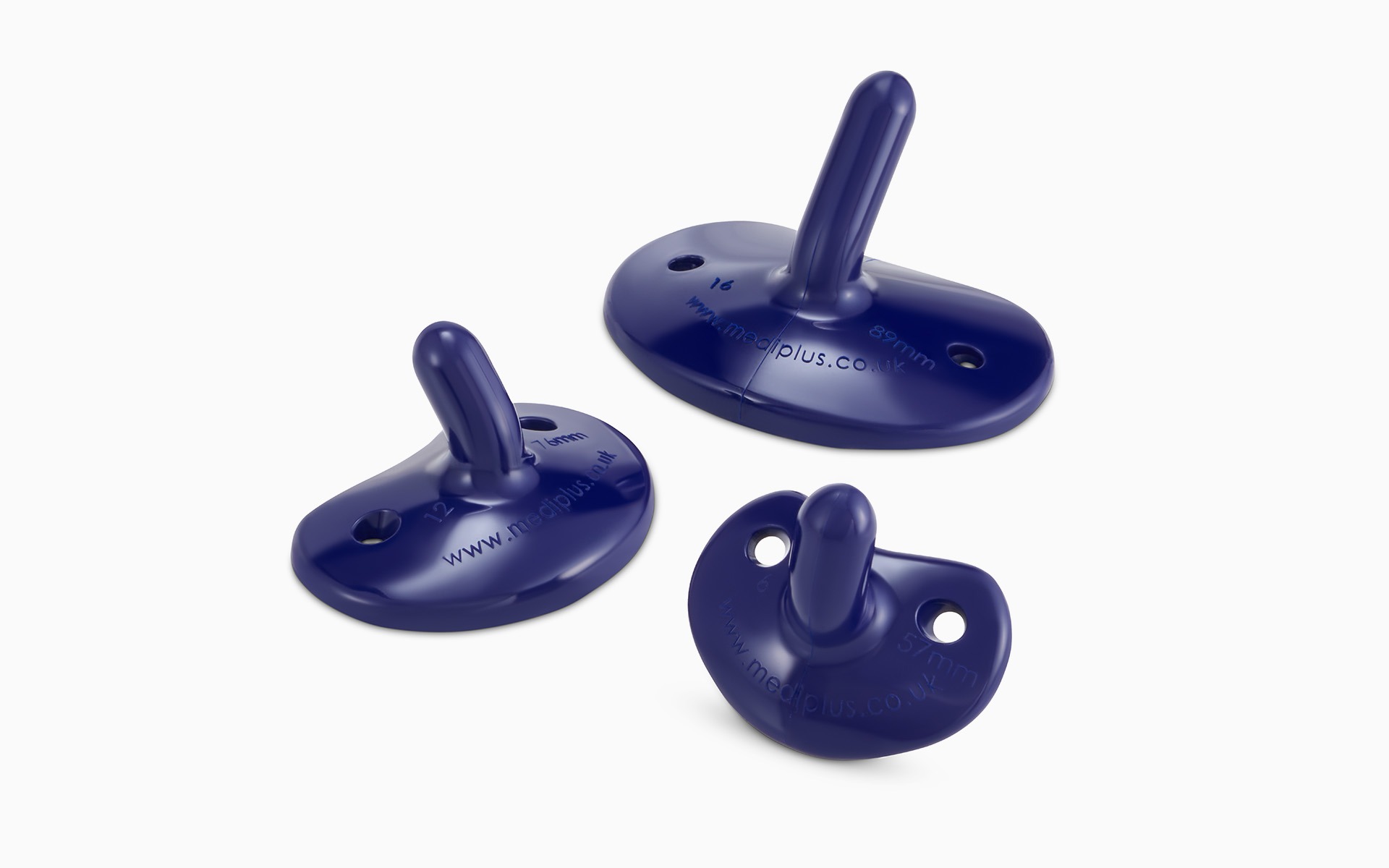
A kidney-shaped plate for support with a curved stem in the centre for stabilization in the vagina
Shelf pessaries have a kidney-shaped plate for support with a curved stem in the centre for stabilization in the vagina. The convex edge of the pessary sits in the posterior vaginal fornix and the concave edge faces toward the bladder. It is usually used for a woman with more advanced prolapse. Challenges with sexual activities and self-management are the same as for the Gellhorn pessary. [1]
Developed as the world’s first silicone shelf pessary, the POPY™ mitigates the symptoms of prolapse and providing a comfortable, easy-to-use alternative to surgical interventions. Made from 100% medical-grade silicone, the POPY™ is soft and malleable, which ensures easy fitting and removal, enhancing both patient comfort and clinician ease of use. The softness of the silicone reduces the risk of vaginal erosion, a common complication associated with harder pessaries, thereby improving patient safety.
As a low-cost alternative to surgery, the POPY™ provides significant savings and a less invasive option for managing prolapse, making it accessible to a wider range of patients.
Pessary use is part of a shared decision‑making process and can be continued long‑term if effective and well tolerated, enabling many women to maintain normal daily activities with reduced prolapse symptoms. The POGP guidelines emphasises the importance of assessing fit and symptom relief during the initial fitting and during scheduled reviews, and adjusting size or type if necessary to achieve optimal comfort and retention. [1]
POPY™ has been developed with patients’ needs at the forefront of its design and is available in a variety of sizes.
To learn more about different pessary types please click here.
Are you interested in learning more or viewing the available sizes?
References:
1. Pelvic Obstetric and Gynaecological Physiotherapy (2025). POGP Clinical Competency Framework for Pelvic, Obstetric and Gynaecological Physiotherapy. United Kingdom: POGP Education Committee. pgg_guidance_v8copy_2.pdf

 Anaesthesia
 Gynaecology
 Operating Room
 Urology