Suprapubic Tube Placement Using the Seldinger Technique

Urology in the US is steadily evolving towards safer, more cost-effective, and minimally invasive procedures. A key example of this shift is the increasing adoption of the Seldinger technique for suprapubic tubing (SPT).

The Seldinger Technique

The Seldinger technique is a guidewire-assisted approach used to gain controlled access to the bladder prior to inserting a sheath dilator and catheter suprapubically. It is recognized as a highly precise, safer, and less traumatic method of catheter insertion compared to blind insertion.

Key Features:

  • Controlled Entry: Involves needle access, guidewire placement, dilation, and catheter insertion [2].
  • Highly Adaptable: Suitable for bedside or in the OR and can be used in conjunction with imaging guidance [3].

Advantages:

  • Supports elective and emergency use [1].
  • Lower Complication Rates: One study found catheter occlusion was more frequent in the blind trocar group (41.7%) versus the Seldinger group (16.9%) [4].
  • Enhanced Safety Profile: Guidewire-assisted placement minimizes trauma to surrounding tissues [5].
  • Versatility: Can be combined with ultrasound for increased precision across various clinical settings [6].

Financial Advantages:

  • Reduced OR Utilization – The guided, stepwise technique allows for bedside or office-based insertion, eliminating the need for OR time and associated staff overheads [7].
  • Shorter Lengths of Stay (LOS) – When performed in office settings, patients can often be discharged the same day. This reduces hospital bed occupancy and improves throughput [8].
  • Fewer Complications – The precision of the Seldinger technique results in fewer adverse events such as bowel perforation, hematuria, and catheter misplacement. This reduces the cost of managing complications and prevents unnecessary readmissions [9].

The adoption of the Seldinger technique signifies a vital evolution in urology care. Offering enhanced safety, greater accuracy, and improved patient comfort, this approach effectively addresses the limitations of traditional blind methods.

Mediplus S-Cath™ System

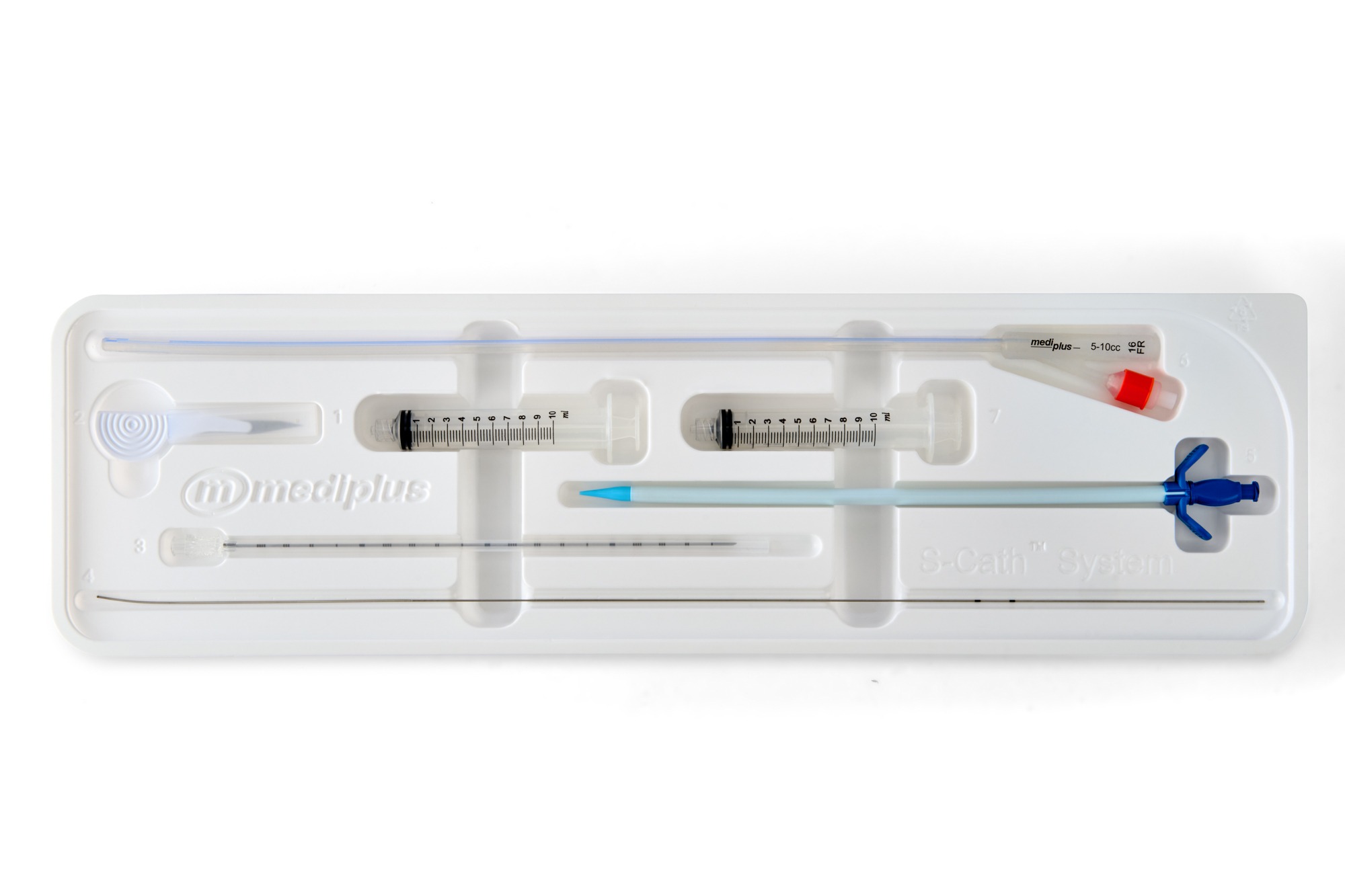
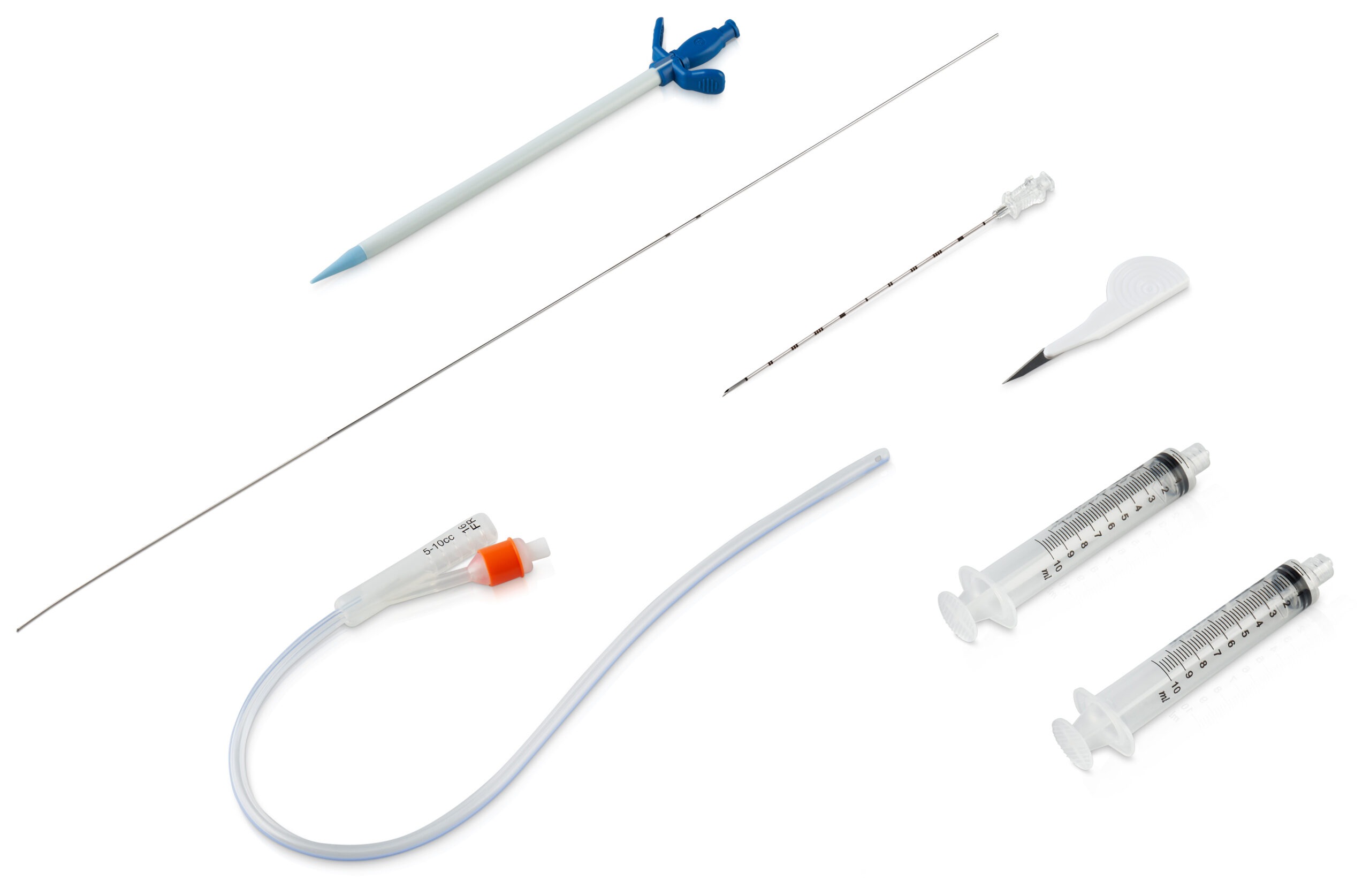
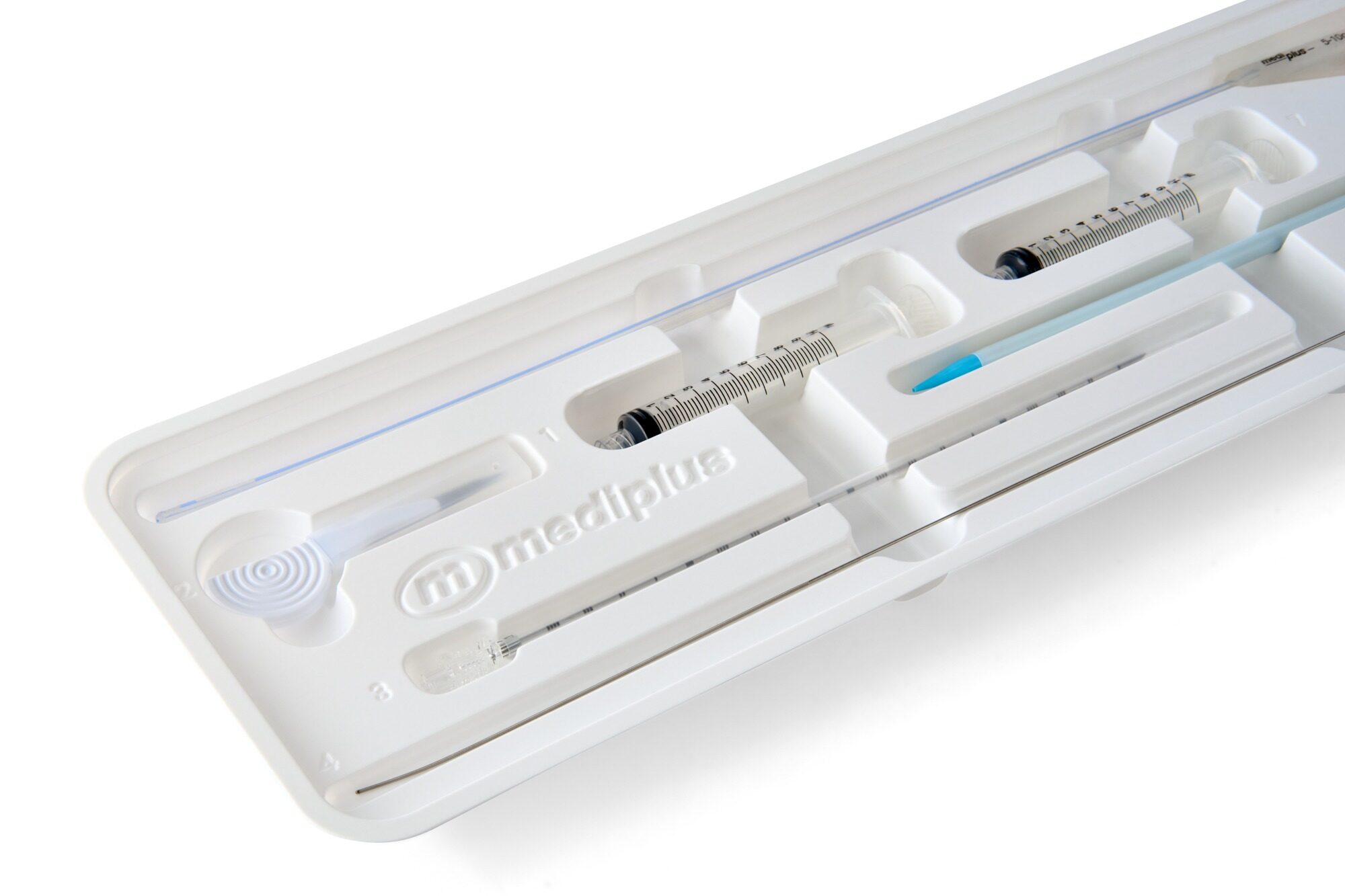
A standout example of this evolution is our S-Cath™ System, which applies the Seldinger technique to deliver a comprehensive, user-friendly solution. Its patented 3-stage guidewire design enhances control and minimizes trauma, enabling safer, more accurate catheter placement. Supplied as a sterile, complete kit – including a needle, guidewire, sheath dilator, silicone Foley catheter, scalpel, and syringes—the system supports both inpatient and outpatient use across adult populations. As healthcare providers work to reduce complications and improve efficiency, advanced devices like the S-Cath™ System offer a precise, low-risk, minimally invasive SPT solution that elevates patient care.

The S-Cath™ System is available exclusively from PSS Urology in the USA.

Helping over 1,500 patients in the USA lead a better quality of life

Trusted for more than 15 years in the UK, Europe, Australia, and Canada

Helping over 10,000 patients globally

“The kit itself is robust and of good quality, and I would strongly recommend its use in all urology, gynaecology, A&E, as well as in all theatre suites.”

Trevor J Dorkin

Consultant Urological Surgeon
The Freeman Hospital

References:

  1. Interventional Radiology. Trocar vs. Seldinger technique: Comparative outcomes. ResearchGate.
  2. Seldinger, S. I. (1953). Catheter replacement of the needle in percutaneous arteriography; a new technique. Acta Radiol, 39(5), 368–376.
  3. Mediplus. (2022). S-Cath™ System—Male SPC Set. https://mediplusuk.com/wp-content/uploads/2025/02/Mediplus-S-Cath-Male-Issued-Oct-2022-EMAIL.pdf
  4. Interventional Radiology. Trocar vs. Seldinger technique: Comparative outcomes. ResearchGate.
  5. Swan Valley Medical. Clinical advantages of Seldinger technique. https://swanvalleymedical.com
  6. ScienceDirect Topics. Seldinger Technique – Overview. https://www.sciencedirect.com/topics/medicine-and-dentistry/seldinger-technique
  7. Smith J. et al. (2020). Cost Analysis of Bedside vs. Operating Room-Based Suprapubic Catheterization. Urol Pract.
  8. NHS England (2022). Reducing Length of Stay: Practical Solutions. [Contextual note: Comparable trends observed in U.S. outpatient care.]
  9. Patel M. et al. (2019). Complication Rates in SPC: Seldinger vs. Traditional Techniques. J Urol.