Capnography masks are used to detect the levels of CO₂ in the blood by measuring End-tidal Carbon Dioxide (EtCO₂).
Capnography masks are used to detect the levels of CO₂ in the blood by measuring EtCO₂. EtCO₂ is the level of CO₂ left at the end of an exhaled breath, reflecting the adequacy with which CO₂ is carried in the blood back to the lungs to be exhaled.
It is important to measure EtCO₂ for effective cardiac monitoring as well as monitoring of patients with acute respiratory distress. Capnography is also important as it can diagnose early respiratory depression and airway disorders, especially during sedation, and in intubated patients. Effective capnography can result in fewer serious complications.
If you would like to learn more about capnography specifically, you can visit our article What is Capnography?
Capnography measures carbon dioxide (CO₂) by analysing how much infrared light is absorbed by exhaled gas. CO₂ molecules absorb infrared light, and the amount absorbed is directly related to the concentration of CO₂ present. This allows the capnograph to assess a patient’s ventilation and display EtCO₂ values.
To capture EtCO₂ readings, a capnograph contains three key components: an infrared light source, a sampling chamber through which the exhaled gas passes, and an infrared detector.
As exhaled breath enters the sampling chamber, the infrared light passes through the gas sample. CO₂ molecules absorb a portion of this light before it reaches the detector. The greater the concentration of CO₂, the more infrared light is absorbed and the less light reaches the detector. Conversely, lower CO₂ concentrations result in more infrared light being detected.
To analyse the patient’s exhaled CO₂, a breath sample must first be collected. Depending on the clinical setting, this can be achieved using devices such as a capnography face mask or a nasal cannula.
To learn more about EtCO₂ and how it is interpreted in clinical practice, read our dedicated article – What is EtCO₂?
Accurate capnography monitoring depends on obtaining a reliable sample of the patient’s exhaled breath. If an incorrect or diluted CO₂ sample is measured, the capnogram may not accurately reflect the patient’s respiratory status, potentially leading to delayed recognition of clinical deterioration or inappropriate clinical decisions.
It is therefore important to use a sampling method that is appropriate for the patient and procedure. The two main methods of collecting exhaled CO₂ are dedicated capnography masks and nasal cannulae. Neither method is inherently superior from a clinical perspective; however, each should be selected according to the patient’s breathing pattern, the clinical environment, and the level of monitoring required.
Ensuring the sampling device is correctly fitted and functioning properly is equally important, as poor positioning, disconnection, or interference from supplemental oxygen can affect the accuracy of CO₂ measurements and waveform quality.
This helps provide clinicians with reliable EtCO₂ values and capnography waveforms, supporting informed clinical decision-making and patient safety.
There are two main ways to collect CO2 samples. Clinically speaking, neither type of sampling method is better than the other. The reason one is chosen by a health care professional over the other is personal preference and patient requirements.
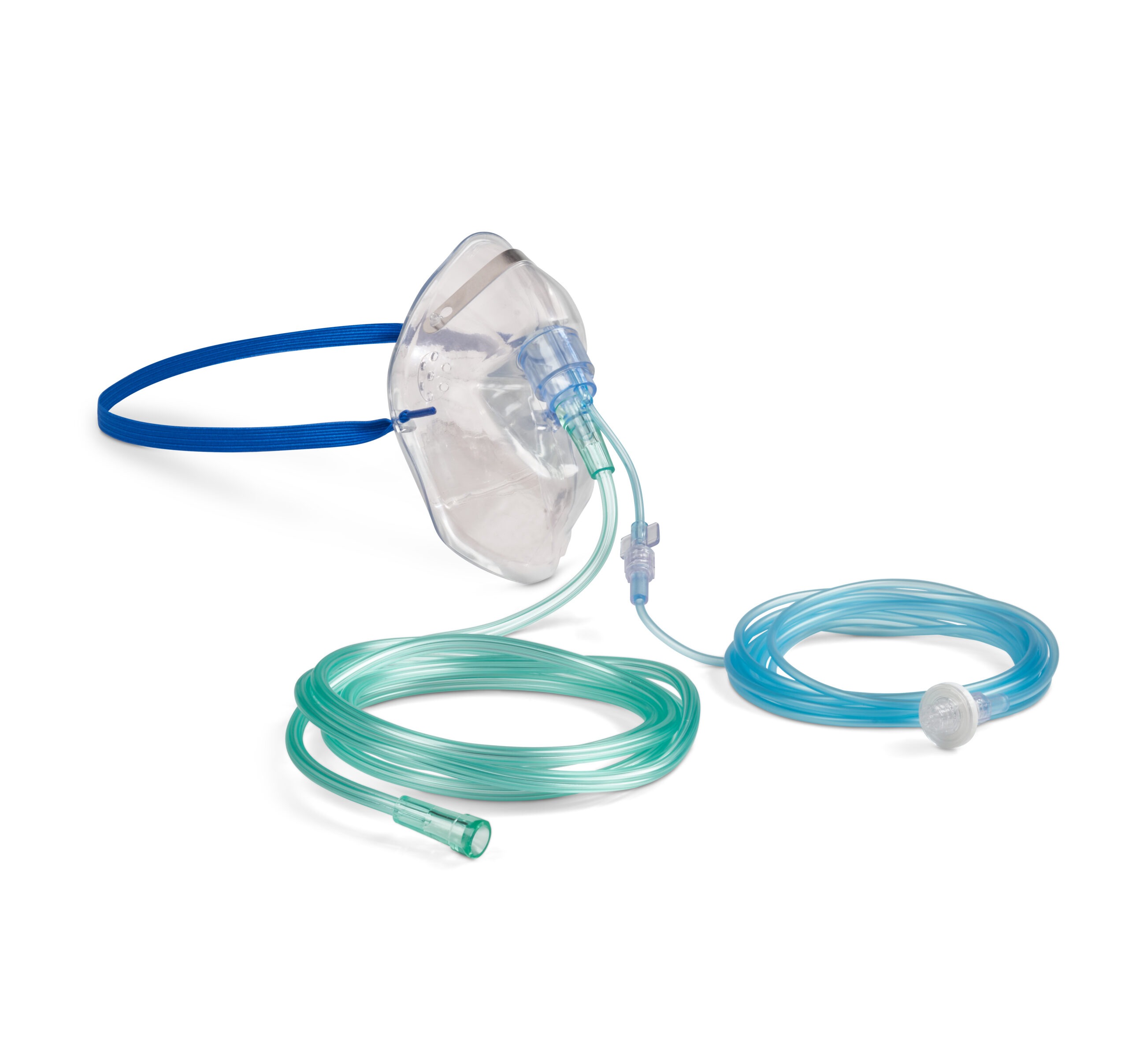
A capnography mask is designed to monitor a patient’s respiratory status whilst simultaneously providing supplementary oxygen. It is recommended that gas analysis is as close to the mouth as possible. Due to the design of a capnography mask, samples are captured both nasally and orally, therefore enhancing both the strength and accuracy of EtCO₂ readings.
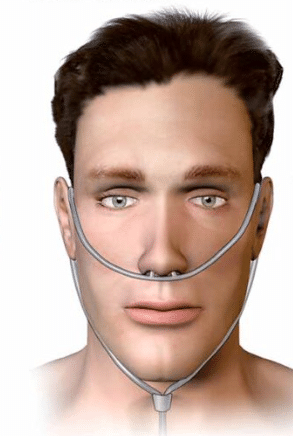
A nasal cannula consists of a small flexible tube that is placed under the nose to provide oxygen whilst also capturing expired EtCO₂. They are often a good alternative for patients that cannot tolerate a capnography mask and are beneficial within an endoscopy setting.
In 2018, a study was conducted on how EtCO₂ waveforms can differ by varying monitoring techniques. The use of a dedicated capnography mask versus an improvised oxygen face mask was used to measure EtCO₂ levels of five spontaneously breathing patients.
The study found that the purpose-built capnography mask ‘demonstrated consistent EtCO₂ measurements for nose and mouth breathing while EtCO₂ measurements from an improvised face mask resulted in marked EtCO₂ level variability.’[1]
Capnography is important and required by guidance[2], but as demonstrated will provide maximum benefits to both clinicians and patients when used with dedicated fit for purpose equipment.
Mediplus has a solution for you.
Our Capnomask™ is a medium concentration mask EtCO₂ monitoring. It was designed alongside clinicians to enable accurate detection of EtCO2 and enhance patient safety. The high-performance Capnomask™ is impregnated with a subtle vanilla scent to help reduce post-operative nausea and vomiting.

 Anaesthesia
 Gynaecology
 Operating Room
 Urology