In this article, we'll explore what EtCO₂ is, how it is measured, and why it is an important indicator of a patient's ventilation and respiratory status.
End-tidal carbon dioxide (EtCO₂) is the concentration of carbon dioxide measured at the end of exhalation. It reflects how effectively CO₂ is transported from the body’s tissues to the lungs and eliminated through ventilation.[1]
As a key by-product of metabolism, carbon dioxide plays an essential role in maintaining normal physiological function, including regulating blood pH and respiratory drive. Monitoring EtCO₂ provides clinicians with real-time information about a patient’s ventilation, circulation, and metabolism, helping to support timely clinical decision-making and optimise patient outcomes.
Measuring CO₂ levels helps clinicians understand how effectively a patient is breathing and provides important information about respiratory function. Because CO₂ has a direct effect on blood pH, the body carefully regulates breathing to maintain a healthy balance.
When CO₂ levels rise, blood becomes more acidic, triggering the body to increase ventilation and remove excess CO₂. Monitoring EtCO₂ allows healthcare professionals to track these changes in real time, supporting the early detection of respiratory compromise and informing clinical decision-making.
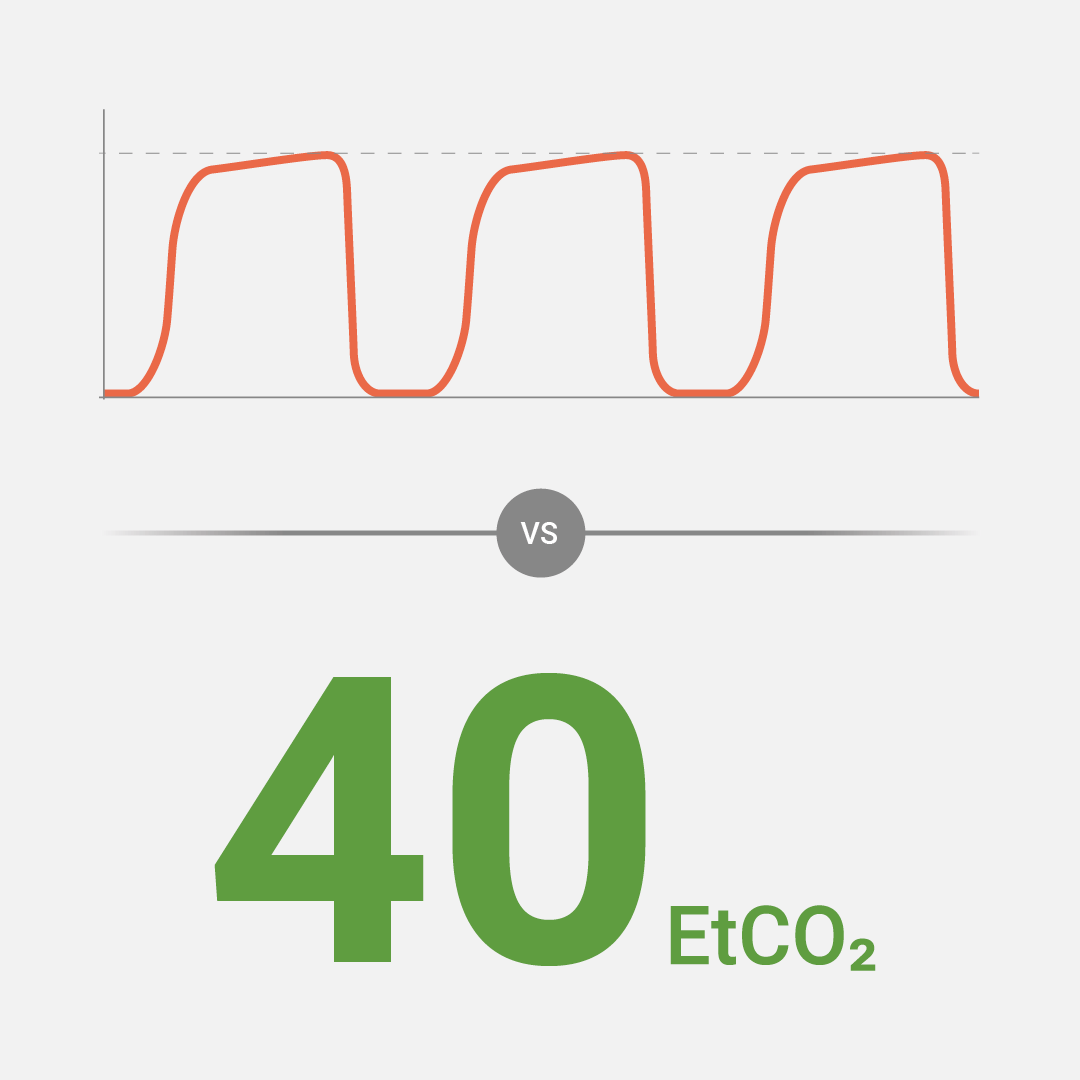
The most effective way to measure CO₂ is through waveform capnography, a non-invasive monitoring technique that continuously measures the concentration of carbon dioxide in exhaled breath throughout the respiratory cycle.
Waveform capnography provides valuable information about a patient’s ventilation, perfusion, and metabolism, making it an important tool for airway management and patient monitoring. By displaying real-time CO₂ measurements and waveforms, clinicians can quickly identify abnormalities and respond promptly to changes in a patient’s condition.
EtCO₂ monitoring provides real-time information about a patient’s ventilation, circulation, and metabolism, helping healthcare professionals make informed clinical decisions.[2]
It is most commonly used during anaesthesia and sedation in the operating room, but also has applications in emergency medicine, pre-hospital care, airway management, and cardiopulmonary resuscitation (CPR). Continuous EtCO₂ monitoring can help clinicians identify respiratory compromise early and respond promptly to changes in a patient’s condition.
EtCO₂ can safely monitor patients during procedural sedation and analgesia. People receiving anaesthesia must be carefully watched during and after sedation, because the medicines used affect the central nervous system, cardiovascular system, and respiratory system[3]. This can affect the brain’s ability to monitor CO₂ levels in the blood and therefore may change how the brain alters a patient’s respiratory system. Due to this, the Association of Anaesthetists (AoA) recommends that patients recovering from sedation are monitored via capnography.
Capnography is a method of measuring EtCO₂ to assist in diagnosing early respiratory depression. This method shows impaired airway function sooner than any other device, including 5 to 240 seconds quicker than pulse oximetry. This can reduce serious complications[4]

EtCO₂ monitoring can provide insight into respiratory effectiveness, breath by breath, to monitor acute respiratory diseases such as asthma, chronic obstruction pulmonary disease (COPD) and bronchiolitis.
Capnography monitors use sensors with radiation to monitor patient’s EtCO₂. This gives an accurate visual and numerical representation of the patient’s respiratory system, alerting HCPs when levels of EtCO₂ are either too high or too low, allowing them to intervene and adapt the patient’s care to improve their respiratory rate. Measuring EtCO₂ is especially vital in high-risk patients, where respiratory differences can be fatal.
EtCO₂ concentration is a reliable index of effective heart compression during CPR, which is associated with cardiac output[5] . It can be used to determine how well CPR is being delivered and also predict if there will be another cardiac arrest or event.
When levels of EtCO₂ are high during chest compressions, above 15 mm HG, it indicates that perfusion is being generated. The higher the level of EtCO₂, the better the perfusion being generated and the better the chances of survival. On the other hand, if EtCO₂ levels are low during compressions, at 10 mm HG, it could point towards a poor compression technique[6].
The first sign of a return to spontaneous circulation (ROSC) is an increase in EtCO₂, which is why it is so important because it provides valuable information to guide those performing CPR[2]. In fact, it is more sensitive than cerebral oxygen saturation (rSO2) in ROSC prediction[7].
Once a patient has been stabilised after CPR, EtCO₂ can also be used to monitor their likelihood of another cardiac incident, This is extremely important as patients with ROSC are at high risk of rearrest for 10 minutes after the event[8].
With ventilation at the appropriate rate, a steady decline in EtCO₂ indicates that CPR may soon be needed or that a vasopressor is needed to support blood pressure. But, if the EtCO₂ is abruptly lost, it may be caused by rearrest or displacement of the advanced airway.
The average values of EtCO₂ are 5% to 6% CO₂, which is equivalent to 35-45 mmHg. Anything outside of this range requires investigation.
Abnormal EtCO₂ readings can result from a range of respiratory, circulatory, or equipment-related issues. Common causes include loss of the alveolar plateau, bronchoconstriction, asthma, hypoventilation, and hyperventilation. Low EtCO₂ values may indicate hyperventilation, reduced pulmonary blood flow, or cardiac compromise, while elevated EtCO₂ levels can be associated with hypoventilation, increased metabolic activity, or inadequate ventilation. Sudden changes in EtCO₂ should always be assessed alongside the patient’s clinical condition and capnography waveform to help identify the underlying cause.
You can find out more about reading abnormal capnographs on our What is Waveform Capnography? page.
Capnomask™ is a medium concentration mask EtCO₂ monitoring. It was designed alongside clinicians to enable accurate detection of EtCO₂ and enhance patient safety. The high performance Capnomask™ is impregnated with a subtle vanilla scent to help reduce post-operative nausea and vomiting.

 Anaesthesia
 Gynaecology
 Operating Room
 Urology